Showing posts with label Fantasy. Show all posts

Thursday, December 15, 2011

24 Days of Christmas – Nazi Referencing Edition


Now that’s more like it.

From the first frames of Santa Claus Is Coming to Town (fake newsreel footage of kids trying to get ready for the arrival of Santa Claus), I was sold. It’s filled with lush claymation landscapes, witty songs, a surprisingly complicated original plot, and themes that range from trying to be the best you can be to the power of being kind to people around you (no matter how weird, mean, or cruel they mean seem, or how comically weird their name may seem). It is also an enormous Nazi analogy, mixed with a Robin Hood story, but more on that later.

Santa Claus is Coming To Town is probably the least well known of the classics by Arthur Rankin and Jules Bass (who also did Rudolph and Frosty). But here are the bare bone facts: Fred Astaire sings, dances and narrates the piece as a postman who knows everything about Santa. Mickey Rooney voices Santa. The movie features a character named Burgermeister Meister Burger who lives in Summertown. Basically, it wants to tell the story of Kris Kringle’s transformation into the one and only Santa Claus. Santa arrives at Burgermeister Meister Burger's as an orphaned baby, but he’s sent away. Then, a crazy wind pulls him towards the lair of the Winter Warlock (who is 17 kinds of evil), so the animals save him and bring him to the Kringles (specifically, Dingle Kringle, which is the greatest name I’ve ever heard, until you hear his brothers’ names). The five brothers bring him to the Elf queen, who lets him live with them (and names him Kris).

The elves can’t get their awesome toys to the little boys and girls because of the awful mountain, but Kris promises to do just that when he grows up. So grown up Kris (who’s a ginger, natch) tries to walk to the other side of the mountain to deliver toys and on the way encounters a penguin, thus confirming that penguins are indeed the Christmas bird. Kris and the penguin (Topper) arrive in Summertown, but Burgermeister Meister Burger has outlawed toys (in an Alan Menken-esque musical monologue). But Kris comes in, all red-trimmed and exuberant, and gives toys to all the girls and boys if only they’d stop pouting. But when Burgermeister Meister Burger is ready to put the kibosh in the whole communist love-in, Kris and Topper have to take off, and Kris suddenly turns out to have all the nonconformist agility of Aladdin and ends up right in the grasp of the Winter Warlock. But Kris’s kindness, and desire to give the Winter Warlock a toy, causes Winter’s heart to melt. Winter helps Kris start making a list (to check twice) of all the children to help him deliver illicit presents.

Burgermeister Meister Burger is, understandably, unhappy and he and Kris start a nice little covert war that actually kind of reminded me of communications in the Warsaw ghetto. Actually, the whole series of scenes of herr Bergermeister with his German accent tearing apart people’s homes to try and find the illegal toys puts Santa in the odd position of playing the role of the Jews in this World War II homage. Or maybe he’s more of a toy-ferrying Harriet Tubman. Either way, he is captured by Herr Bergermeister, who lights their toys on fire and HOLY CRAP this is a Nazi analogy, I’m not just being overly flippant. This is totally intentional.

Anyway, Kris’s lady love (distressed about Kris’ arrest) starts singing an acid-trip-styled ballad about being changed by Kris and fascism (or something), which also causes her hairstyle to change from uptight bun to flowy hippie locks. At this point, it is abundantly obvious that this movie wants more than just to tell the story of Santa. It’s actually providing trenchant political analysis about greed and fascism being overcome by kindness and generosity. Also that hippies have better hair.

Badass Jessica then frees Kris and his friends using magic reindeer. Kris grows out his beard (like a dirty hippy) to hide from Burgermeister Meister Burger, and then changes his name to Santa Claus, before marrying Jessica “in front of the lord.” The Winter Warlock (who has been losing his magic throughout the movie) summons up one last ounce of magic and lights the first Christmas tree. The movie ends with the beginning of the tradition of exchanging presents with the people you love on Christmas. A now-married Santa Claus takes on the task of giving out secret presents every year to the boys and girls. Thus Santa is recast from lovable philanthropist into the role of exiled revolutionary building his own castle outside of the society that banished him.

After the Burgermeisters fall from power, cool guys in jeans come and throw out their paintings and Santa is revered as the nice guy he truly is. But Santa gets old, and can no longer go out all the time delivering gifts, so he has to switch to just Christmas (because it is the holiest night of the year).

Even more than Rudolph, Santa Claus Is Coming To Town takes abundant advantage of the expanse of claymation. Every scene is full of countless awesome little details, and the characters are full of little visual quirks. And from the Nazi analogies, to the movie-ending monologue begging us to “learn Santa’s lesson” about peace on earth and goodwill towards man, no one can accuse this movie of being paint-by-numbers. It is the rare childhood classic that actually grows in estimation when watching it as an adult. 

Random Observations: 
• Does Kris Kringle look like the brothers in 7 Brides for 7 Brothers to anyone else? I half expected him to throw some ladies over his shoulder and bring them back as his bride.

“Watch out for the doll. She’s a hardened criminal I hear.” This movie is freaking adorable.

 • “Why look here, changing from bad to good is as easy as taking your first step.” Who knew this movie was actually super helpful for New Year’s Resolutions as well as Christmas Cheer?

• Jessica kind of looks like Joan from Mad Men. Just sayin’.

 • 99% Watch: Besides Santa’s intense Socialist values, disregard for property laws, and distrust for authority (especially law enforcement), there’s actually less overt class warfare references here, just a general disdain for tyranny, except when it comes in the form of jolly men with beards.

• The point by point Santa explanations (“and that’s how he started going down chimneys”; “So that’s how he got the red suit!”) should be annoyingly on the nose, but they’re just so cute, I couldn’t get annoyed.

Wednesday, December 14, 2011

24 Days of Christmas – Frosty Reception Edition

The second of our classic animation trifecta is Frosty.

Shorter and less revolutionary than its reindeer brethren, Frosty looks less like Coraline and more like a classic Rocky and Bullwinkle cartoon.

A bunch of kids get together after school on the day before Christmas to make a snowman. A magician’s magic (and very argumentative) hat falls on old Frosty’s head and he immediately comes to life. The kids and magician accept this remarkably quickly. Frosty is much more of a goofy children’s special, with very little to recommend itself outside of nostalgia and painfully catchy musical numbers.

With a dastardly, mustachioed magician, a wily bunny rabbit, and a precocious blond sidekick named Karen, dimwitted Frosty makes his way to North Pole salvation and encounters a series of trivial obstacles and adorable woodland creatures’ Christmas. Along the way, he seems to hit about 1,000 lame children’s movie clichés. Then Frosty melts, and the children cry, and the jazzy/bluesy theme comes on, and Santa has to console poor abandoned Karen. Here, the movie gets as close as it comes to metaphor, talking about how “Christmas snow” is always around us, even when it seems like Spring or Summer. 

Now, it may seem grumpy or un-Christmas-like to complain about a lack of substance in a half-hour animated special designed for children. But if I’ve learned anything throughout the other installments of this series, it’s that Christmas makes for particularly ripe creative ground, home for all sorts of stories about love and acceptance. So, as somewhat nauseous as it makes me to admit it, I’ll say it – Frosty kind of sucks. It’s not a particularly substantial story to begin with, but the animated special could be more fun to make up for its lack of real stuff. Instead, it feels surprisingly paint by numbers.

Random Observations: 
• I love that the movie felt the need to make clear to children that it is only okay to steal a hat from a mean old magician man (even if you are an adorable bunny rabbit)

“Those silly snowmen, once they come to life, they don’t know nothin’.”

• 99% Watch: The children and Frosty’s lack of money keeps them from getting him to the North Pole, but some clever Robin Hood’ing by Frosty (jumping a refrigerator car on a train, naturally) gets him there anyway.

• Maybe Karen is so cold because she’s not wearing pants.

Monday, December 12, 2011

24 Days of Christmas: Grinchy Edition


by Rachael Nisenkier

Another new Christmas movie for me! Although I’ve seen the animated version more times than you can shake a stick at*, and have read the book pretty consistently since childhood, I was full of enough Jim Carrey-fatigue by the time the live action version of Dr. Seuss’s How The Grinch Stole Christmas showed up that up until this experiment I had avoided the newest version.

Carrey’s Grinch is a grosser concoction than the animated version (and than the version I see in my head when I read the book). He’s also a lot more gleeful in his badness. Take the early scene where he struts through Whoville in a jedi-like robe and causes random acts of crazy pants. In this world, the Grinch isn’t so much an angry misanthrope hiding in the mountains disliking the Whos, but an active force of malevolence. Along with the expansion of the Grinch’s personality, the Whos themselves have been expanded into a semi-functional and way less innocently endearing presence than in the book. They’re a Christmas-obsessed, consumerist hot mess where the overworked Post Master General finds himself at the center of a Grinch-related controversy. Who-ladies spend billions trying to outdo each other’s garish Christmas decorations. Cindy Loo Who, the very spirit of innocence in the book, becomes a overly precocious, semi-cynical, but still painfully adorable pre-teen who spends a good portion of Christmas trying to figure out what happened to the Christmas she thinks she remembers from Childhood.

In short, this is not a short and sweet tale of finding your inner child and learning to love they neighbor, but a full satire of the whole celebration of Christmas. It is simultaneously pointing out the excess often associated with Christmas (which ultimately devalues any meaning behind it) while also poking fun at people who therefore take the Grinchy “it’s all worthless” point of view. If a long version of an already perfect story had to be made, there are way worse ways to do it.

The problem of the Grinch is the same as its greatest strength. Jim Carrey, putting in a crazy, gleeful, insane tour de force performance at the center of the story, never fails to entertain. But, and this is a big but, he also makes every other scene pale in comparison, and reveals just how little there really is to that particularly side of the satirical edge. Cindy Loo Who may look super cute, but it’s hard to really care about the candy coated, overly ironic, way-too-clever for its own good Whoville part. I also wasn’t a huge fan of the whole “spelling out the reason for The Grinch’s grinchiness.” It definitely fleshes out the character, but sometimes, it’s better just to keep someone a force of chaos. Cindy Loo Who, in this version, attempts to convince The Grinch to come be master of Who-bilation for the Christmas ceremonies in Whoville. After he wrestles with his self-loathing, he decides to come on down to the people that scorned him once upon a time. Although he comes to bask in the gathered Whos' fear and awards, he ends up in an uncomfortable family reunion that sees him stripped of his dignity in a series of painfully over-the-top Who celebrations, most of which seem to involve stuffing disgusting quantities of food into Jim Carrey’s face.

Apparently, Jim Carrey found the process of becoming The Grinch so harrowing they had to consult a Navy Seal expert in torture resistance. Watching these scenes, one can really see why. Nonetheless, everything seems to be going well, complete with a slow-mo race-winning sequence and joyful parade through town. Cindy is certainly happy. Until the mean, self-obsessed mayor decides to give him a gift that ties in directly with his childhood trauma, before stealing The Grinch’s former gal pal. The Grinch predictably explodes, monologuing about the evils of consumerism, shaving the mayor’s head, and depressing little Cindy (he also lights a tree on fire and follows it up with one of the world’s worst puns).

When this fails to ruin the Whos' Christmas, The Grinch decides to follow the original’s plot and steal all the presents. This whole part is unnecessary and kind of boring. It gives us nothing new about the character, the situation or the movie in general, besides setting up a higher level of stress on the Lou Who family. After this middling middle, the movie starts to pick up steam again, mainly because Carrey is alone acting crazy, and because the idea of this psycho rummaging through people’s homes to steal their Christmas is pretty funny. (Less funny is the scene where he makes the sleeping mayor kiss his dog’s butt, but that’s a whole other issue).

Then, the Whos wake up and are predictably nonplussed, until the whole Who family reminds them that all those presents and consumerism was keeping them from the true meaning of Christmas anyway and they decide to sing. The problem is, this is totally unearned. Cindy Lou Who and family may have been feeling this since the beginning, but the petty creatures that populate the movie's Whoville certainly haven’t. So while it’s very nice that adorable Cindy can redeem The Grinch, it seems unbelievable (yes, even in a movie that features a fully green yeti creature and an entire world inside of a snowflake, one can find stuff that is too unbelievable) that she has also redeemed the town full of mean mini-grinches.

I wanted to feel heart warmed by the end, I did. But aside from thinking that Jim Carrey should become a yoga guru for how many insane positions he can get his body into, I mostly just felt nostalgic and curious as to how I can get the animated version.

Random Observations:
• 99% watch: the Whos celebrate when they max out a credit card, and cheerfully say “I’ll be paying this off for years! Plus my interest rates are awful.” Also, the mayor buys his lady love a car “generously funded by the taxes of the people of Whoville.”

“One man’s toxic sludge is another man’s POTPOURRI. I don’t know it’s some kind of soup".

• HOLY CRAP. That’s Jenny Humphrey. JENNY HUMPHREY IS CINDY LOU WHO. How did this realization not come sooner? Oh, Jenny, you are going through hit SUCH a downward spiral.

• While I mostly loved Carrey’s take on The Grinch, I found myself struggling to contain my nausea whenever he sexually harassed Ms. Whovier.

• Do you think Carrey intentionally based his Grinch voice on Jimmy Stewart?

• The Grinch agrees with me about Santa. “He probably lives up there to avoid the taxes.” 

• Anthony Hopkins' comfortingly British-lite voice narrating all the Seuss parts just made me miss the animated version more.

• Additional 99% watch: “Arent you gonna cuff me? Put me in the chokehold? Blind me with Pepper Spray?”

*If that’s your idea of a good time.

Thursday, December 8, 2011

24 Days of Christmas: Old-School Edition


by Rachael Nisenkier

I chose the black and white 1947 version of Miracle on 34th Street not because of some pretentious need to see the original, but because I don’t think I’ve ever seen it before. I know I’ve seen the Matilda version at some point in time, so I’m much more interested in seeing how the 1947 classic holds up.

You know the plot: Kris Kringle takes over for a drunk department store Santa Clause and then ends up having to go to trial to defend his Claus-y-ness. As I said before, it kind of boggles my mind to think of the logic of this for too long (seriously, how do the parents NOT notice the extra presents?). One of the most interesting things about watching the 1947 version is that the essential message of the film is about cynicism and faith. The 1940s and 50s are traditionally a time we look back on with a nostalgic fondness for a bygone naïve era. But here, we are meant to examine the cynicism already prevalent in 1940s America. Given how much we believe our cynicism has grown since then, it’s particularly intriguing to examine the story. So here’s the rest of the plot, for those, like me, who only know the bare bones.

On top of the Santa Clause story, there’s the tale of Susan and Doris Walker. Doris is an executive at Macy’s who plans the Macy’s Thanksgiving Day Parade. She’s also divorced with a kid, which was apparently akin to being a leper in the 1940s. That kid is Susan (Natalie Wood, proving how ridiculous it was that she ever played a Puerto Rican), a girl so logical and straight forward that she doesn’t believe in giants, let alone one man who drives around with reindeer who fly to deliver toys to all good little boys and girls in one night. Santa Clause makes it his mission to help make Doris believe again, against all odds, in order to save Christmas. Or something.

Like It’s A Wonderful Life, this movie supports the very Christmas-y idea that doing the right thing, even when it garners bad stuff in the short term, leads to good things long term. Macy’s Santa Claus starts sending desperate parents to other stores so they can find their last minute Christmas presents. Far from hurting profits, this leads to an increased bottom line thanks to store loyalty. An amateur psychologist proclaims Kris insane, but Macy’s decides to keep him on staff since everyone loves him. They set him up to live with Doris’s neighbor, a bachelor lawyer who clearly has eyes for Doris, and in sharing close quarters with Doris, Susan and Mr. Lawyer, Kris begins to expand their ideas of what is possible. Then, the psychologist goads Kris into hitting him, and gets him carted off to a mental institution. Now, Mr. Lawyer (whose name is Mr. Gailey, but Mr. Lawyer is more fun) has to represent Santa in the court of law and public opinion. It’s a classic faith versus cynicism, corruption versus goodness, warmth versus cold case. And the ending, featuring grandstanding and beautiful monologues, as well as an abrupt and tear-jerking change of faith by Doris, is as hopeful and philosophical as one could wish from a Christmas movie.

At the end of the day, this movie doesn’t seriously challenge anything or say anything a thousand other Christmas movies hasn’t before (and, much more extensively, after). What it does, though, is make a case for the extraordinary. I’m pretty painfully agnostic, myself, and tend to live a Christmas that is more about family, friends, and popular culture than it is about the manger, Mary, and Jesus Christ. But that doesn’t mean that I don’t believe in what the movie calls “intangibles.” In fact, the reason why Miracle on 34th Street has remained so steadfastly popular is precisely because of its ability to fight through cynicism. It’s said best in the words of Mr. Lawyer himself, Fred Gailey: “Faith is believing when common sense tells you not to. Don't you see? It's not just Kris that's on trial, it's everything he stands for. It's kindness and joy and love and all the other intangibles. "

Random Observations: 
• Santa Clause in 1947 was skinnier than the average person today? That’s… depressing.

• I refrained, as much as possible, from ranting about this in the body of the review. But why the hell do all these people think it’s okay to tell Doris how to raise Susan? Oh, yes, that’s right, because she’s a woman. A DIVORCED woman. Blow me.

• Much more endearingly, the movie questions the whole idea of “normal,” and reaffirms the value of imagination. Take THAT 99%, this movie also makes a great argument for the ways that the free market actually supports goodness.

Monday, November 21, 2011

Why the Twi-hate?


by Rachael Nisenkier

I did not see the new Twilight movie at midnight. But I would have.

Here’s the thing. I get your point, hypothetical Twilight-hater. I don’t think that Bella and Edward have a particularly healthy relationship (in fact, I could and have written pages and pages on the anti-empowerment message the books so often embody). I don’t think the writing’s particularly good. The movies are essentially hours-long excuses to make Robert Pattinson look moodily gorgeous and Taylor Lautner take off his shirt. And the plot of Breaking Dawn could be the stupidest yet, with Bella losing her virginity, in a way that’s guaranteed to make even sex-positive feminists squeamish, before growing mystically pregnant. But my question remains… why do we hate on Twilight so much?

Wednesday, August 17, 2011

From the Desk of A Critical Caster

by Rachael Nisenkier 

Oh hey, new images of Peeta and Gale from the upcoming Hunger Games adaptation. I, personally, love them. I stand by my (cautious) belief that the seemingly look-blind casting approach that led to a naturally blond Katniss, dark haired Peeta, and Viking God-related Gale will lead to a movie cast with actors who actually can behave like their parts.

What do you think? More at Ew.com

Monday, July 25, 2011

Captain America, the set up

by Rachael Nisenkier

Watching Captain America feels a whole lot like watching a so-so pilot episode for a TV show you really want to watch. In there are all the elements that you know you’re one day going to love (more on that later), but the actual substance of the episode seems more about putting the pieces in place for the show to come than it is about what’s actually going on.

Anticipating the Avengers

by Rachael Nisenkier

I’m officially nervous.

It was sitting in the back of my brain during the post-credits sequence of Captain America. And as I breathlessly indulged in comic-con coverage on entertainment websites, it just sat back there, percolating, bubbling up into my cerebellum. It brings unbidden images of middling box-office numbers, critical dismissal, and fan eruptions of anger.

I’m nervous because Joss Whedon is directing and writing The Avengers! There, I said it.

I love Joss Whedon in a way most people reserve for people they’ve actually met. I love his easy going nature in interviews, the stories of Shakespeare parties, his feminist rantings. But mostly, I respect the crap out of his work. He’s a great writer and an increasingly impressive director, who has turned in some of the best episodes of television of the past twenty years. He’s played with the form and constantly seems to want to expand what he is capable of. He’s ambitious, innovative and intelligent. He’s also a huge nerd. His run as a writer on the X-Men comics was funny, smart and really true to the characters. His Buffy Season 8 comic managed to really take the form by the hand and lead it into this strange, mystical, uniquely Buffy world. And he imbues even his most mainstream work with his nerdy bonafides. So why does it scare the crap out of me that he’s helming The Avengers?

Tuesday, July 19, 2011

Goodbye and Thank You Harry

by Rachael Nisenkier

I have a long history with Harry Potter. I got the first book when I was 11. I read the last one my sophomore year of college. The books and movies have been there for me from pigtails to braces to paychecks, and everything in between. Last year, when Harry Potter and the Deathly Hallows Part 1 came out, I unpacked my Harry Potter baggage here.* And when the movie came out, I reviewed part 1 here.

I start with my history because Harry Potter and the Deathly Hallows Part 2 is a uniquely reflective film. Every image in it has been built to reflect the movies that came before it. In the requisite movie marathon that came with the release of the newest film, I recognized one major shift in having David Yates take over the director’s chair for the last four films. Yates, maybe due to the benefit of having most of the books out for all of his movies, seems uniquely aware of and concerned for cinematic continuity and for creating a universe within the movies that makes sense, thematically, logically and emotionally. 

The films will never have the span of the book. They’ll never be able to fit in all the subplots, all the Ron Winning At Quidditch, all the Hermione Saves The House Elves, all the complicated bits of magical lore that explain possession of the Elder Wand. But where Yates excels is creating a cinematic universe that makes sense and to which Deathly Hallows Part 2 is a near perfect conclusion.

Friday, July 8, 2011

Green Lantern and his panty-wearing friends

by Rachael Nisenkier

I have a theory. I like to call it the “panties of justice*” theory. It’s about what separates easily adapted superheroes from the ones who seem to struggle on their way to the multiplex. It’s basically the difference between Batman and Wonder Woman. Both are noble creatures with a complicated, fascinating backstory and great personal strength. Yet one of them fights crime while wearing a state of the art suit of body armor, and one wears the panties of justice. In the world of comic books, or their cartoon adaptations, the panties of justice look just fine. We buy into them. But on the big screen? It’s hard to take a heroine seriously who chooses to outfit herself in what amounts to little more than a patriotic bathing suit.

Tuesday, June 7, 2011

First Class

Kelly recently reviewed the excellent Thor and in her review mentioned that I'm a bit of a superhero nerd. I actually think I'm the perfect amount superhero nerd: knowledgeable enough to enjoy the films and add a bit of depth to moments like Cyclops saying in the first X-Men, "What would you prefer, yellow spandex?" But I'm not so much of a nerd as to be bothered, or even really notice, continuity errors or changes from the originally, especially not in Marvel properties. As such, I'm exactly the audience Marvel wants for these movies: enthusiastic to the point of rabid, yet easy-to-please.

And the thing about Marvel is, with few exceptions, they've been doing a damn fine job of pumping out movies that both provide fan service and truly good, serviceable films. Mostly, they do this by hiring people actually suited for the job. On Thor, the man who it turned out could best bring to life the grandiose absurdity of Asgard was Kenneth Brannagh, and the only guy I could imagine balancing on the tightrope of slapstick fish-out-of-water comedy and hubris was Chris Hemsworth. For X-Men: First Class, that's Michael Vaughn (Kickass) as well as stars James McAvoy and Michael Fassbender.

About halfway through First Class I found myself wondering if the movie was going to suffer from what people refer to as "prequel-itis." This occasionally debilitating disease robs films of their dramatic tension, due to the fact that we all know how they end. But the knowledge of where Magneto, Mystique, Professor X and the others end up adds an element of grandiose tragedy to the buddy story, even in its most lighthearted moments. Enjoying that montage where Fassbender's Magneto and McAvoy's Xavier exude a cocky enthusiasm as they track down mutants? Flash forward to Ian McKellan locked in a plastic prison at the beginning of the first film.

On top of that, the reliance on WWII and Cold War imagery adds an element of realism amongst the blue-skinned mutant shenanigans. It really helps to tease out the X-men themes of belonging, acceptance and honor.

X-men First Class is not a perfect movie (in comparison with Magneto and Xavier, for example, Mystique as the third side of that triangle seems underdeveloped), but it's a solid, exciting, well-developed outing that continues X-Men's casting hot streak. It's too bad the opening weekend box office didn't match that of recent smash The Hangover II, but if Marvel continues to be have the best studio quality record short of Pixar, I'm looking forward to even more chances to reenter the marvel universe.

GEEKY SIDENOTES (here be spoilers!):
* I liked the government precursors to S.H.I.E.L.D.
* Jennifer Lawrence's ageing up into Rebecca Romijn was all sorts of brilliance
* Kevin Bacon?! KEVIN BACON!

Sunday, May 29, 2011

The God of Thunder

Rachael is the superhero expert, I freely admit that. When it comes to genre knowledge, franchise history and source material familiarity- I'm not your girl, at least not when we're talking Marvel vs. DC (or whatever it is we're talking). But I've seen my fair share of hero movies. Like everyone, I'm a Batman fan and hold The Dark Knight in the highest regard. I liked the first Spiderman and all three X-Men (the first one publicly, the second 2 not so much), even Iron Man impressed me (though I didn't see the sequel). So I'm going to talk about Thor. If you think that I am wrong about Thor, let me have it in the comments section, because I freely admit that I'm not on my own turf here.

But here we go nevertheless...

Wednesday, April 6, 2011

The Hunger Games Makes the Jump to My Cinema

I have been obsessed with The Hunger Games since I first sunk into Katniss's world. Over on My Bookshelf, I waxed poetic about how the series helped me recapture that Harry Potter, so eager in anticipation magic. So I can't believe it's taken me this long to comment on the casting of the scary-as-hell, god-i-pray-they-harry-potter-it-and-not-golden-compass-it movie adaptation.
First, Katniss. The girl who was on fire. For this dark skinned, dark haired, badass warrior, the movie chose Jennifer Lawrence, who may be badass but is decidedly not dark skinned nor dark haired. And honestly? If the movie wants to cast a blond oscar-nominee over a brunette who can't act, I'm down with it.
That goes for Peeta and Gale too. In the books, Peeta is blonde and I always imagined kind of all-american-boy looking, with broad, bakers' shoulders and an open face. Gale is darker skinned and haired, more like his long time best friend Katniss. And the two actors they cast? Josh Hutchinson, dark haired and smaller, is Peeta, and the light-haired all american-boy Liam Hemsworth is playing gale.
But honestly? I never cared that Daniel Radcliffe had blue eyes rather than green, and I don't care that Maggie Smith is older than I pictured McGonagall. What I care about is that these actors are capable of bringing my beloved characters to life. And by casting people with no overt physical resemblance to the characters (e.g. by NOT casting Alex Pettyfer as Peeta just because he has blond hair, despite the fact he can't act), I'm making the leap of faith to believing that they are casting based on talent. A leap of faith underscored by how talented I KNOW Jennifer Lawrence and Josh Hutchinson are.
So color me cautiously optimistic for the movie adaptation of this challenging, fascinating and heart breaking book series.
And also cautiously optimistic they'll cast Robert Downey Jr. as Haymitch.

Monday, March 21, 2011

The Adjustment Bureau

The Adjustment Bureau could have been a really great film. At its core it's full of interesting philosophical questions, ones that introduce possibilities that both fit into and are new to global spiritual narratives. Ideas of fate, free will and intelligently designed plans are expressed alongside darker ramifications like the sacrifice of potential in some for the ultimate success of others. The thought that the plan for our lives is always being rewritten, that there are angel-like forces at work in our world to enforce it, the fact that there are lingering effects from previous incarnations of our plan, the possibility that our plan involves cutting someone we love's life short so we can be driven to succeed... the fact that there is a plan at all, an architect, the chairman! There is so much intellectual possibility in this film.

And it expands from there. Writer/director George Nolfi plants these ideas into the world we're currently living in and then ties them back through time, using the highs and lows of human history as evidence for his mythology. The whole thing is quite brilliant. But then it starts to break down.

Tuesday, January 4, 2011

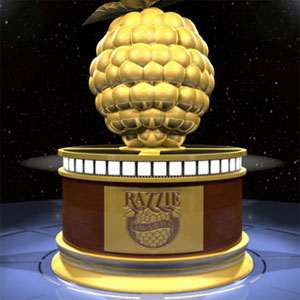
Really, Razzies?

Normally, I find the Razzies (the annual ignominious movie awards given out to the worst movies of the year) pretty accurate. But this year, they decided to nominate The Twilight Saga: Eclipse, and I gotta call bullshit.
First off, let me clarify. Twilight: Eclipse is not great art, nor is it a fantastic movie bound to win over people who hate the series. HOWEVER, it is also not an awful, worthless movie a la most Razzie winners (or for that matter, previous Twilight installments). In fact, in terms of direction and acting, it's actually the best of the series. It's really cool to hate on Twilight because teen girls love it and teen girls are all ridiculous, hormone-ridden airheads, but that doesn't make its inclusion on this list any less baloney.
The Razzies, reacting to the counter-culture desire to hate on all things Edward Cullen, is ignoring many far more worthy contenders for their ire, like Valentine's Day (which made me chuck popcorn at the movie screen), Leap Year ( which made me audibly groan through half) and When In Rome (which came dangerously close to making me dislike Kristen Bell).

Wednesday, November 24, 2010

...And The Deathly Hallows

If I were to remake the list below, Deathly Hallows would easily and handily fall at number 1. It wouldn't even be a debate. Let's just get this out of the way, right here: to me, Harry Potter and the Deathly Hallows was easily the best film of the series, the best adaptation of a Potter book, and one of the best films of this year.

In a lot of ways, DH represented the perfect melding of book and movie. Freed from the crunching time constraints that the last four books have had to deal with, and with a fanbase that have almost all aged out of tweendom and strongly into "legitimate adult audience" world, Deathly Hallows is, appropriately, the most adult and compelling of the films.

I'm going to attempt not to conflate the book's excellence with the movie's own excellence. Of course Deathly Hallows tells a deeply fulfilling and appropriate story: we already read the damn book. JK Rowling's concluding chapter was a masterpiece of devotion to theme and character and the culmination of years of effort. But the movie lives up to this standard by taking the excellent material laid down and making it come to life cinematically.

As directed by David Yates, far less of the Harry Potter emotional journey is spelled out than ever before. The characters are going through some of the most intense emotions they've ever felt, but gone are the days when they will, child-like, spit it all out at the camera. Yates has such faith in his actors and audience that finally the series lets subtext remain subtext. You don't need to be told every detail of what's going on. We don't need Harry, Ron or Hermione to ever monologue about how weird it feels knowing the whole fate of the wizarding world lies on their shoulder, or how much more serious the danger is in this installment. In true cinematic form, we can tell from the imagery (Hermione's hands caked in Ron's blood, the casual death of a Hogwarts professor, Harry and Hermione's make out scene) and from the quiet moments (like Hermione's thoughtful line as the trio stands alone in Grimmauld Place, "We're alone.").

The way you can really tell that this is an excellent adaptation of the books is in the stuff that it just plain makes up. From the first shot of Hermione wiping her parents memory to protect them (which is mentioned in the book but not shown), you can tell that Yates and Kloves understands exactly what this means and they're counting on you to get it too. And damn if Emma Watson isn't knocking it out of the park, showing both Hermione's steely, bad-ass determination and how much it deeply hurts her to have to do this to her parents at the ripe old age of 17.

Or take the oft-discussed tent scene. It takes place right after Ron has (spoiler alert) left Hermione and Harry in a fit of horcrux-and-jealousy-induced rage. Hermione has been a vacant mess. Harry, being a good friend, starts goofy dancing with her to cheer her up. But they're also to mature individuals who are stuck in a bleak, cold world with little help, and there's a tiny moment between the two where it almost seems like this is going to a very non-canonical place. The ultimate decision by both characters to realize what their relationship really is therefore seems both more honest and more profound for the movie having gone to a place that the book never had to. It's both true to these characters and completely fabricated, and it provides a very vivid portrait of both the grace and realisticness of Harry and Hermione.

The fact that the added details feel perfectly in place is the greatest indicator that this movie, even more than any of the other films, gets what made the books worth it.

I could write a book full of praise for the main three's acting in this film. Gone are the days of awkward line readings, forced emoting, and eyebrow acting. All three main stars have blossomed into something fantastic. But if I had to give an award for best performance, it'd go to Emma Watson, hands down. I've mocked the girl who took my role for years. She was the weakest link for a while. But Watson provides such a painful, quiet, deeply flawed and wounded and yet strong and badass performance as Hermione that it made me love one of my favorite characters of all time even more for having seen it. There's another tent-scene, where Hermione slips back into her old school-girl esque habits ("Actually, I'm highly logical...") in which you can really tell just how far Watson has come from the old "Wingardium LeviOsa" days.

Some people are claiming the movie feels like only half a film, or is somehow unsatisfying, and I guess I can understand that, but for me, Deathly Hallows was everything it needed to be and more, and a beautiful testament to why it's worth it to adapt beloved books to film.

Harry Potter, the book and movie series, hasbeen such a profound part of my life for so long that the discovery of new levels of enthusiasm was a pleasant and fantastic surprise. The reason why it's ever worth the effort to adapt a book to a movie is not just to make money but, in a movie like Deathly Hallows, its the pure unadulterated joy that can come from watching a new work of art being spun from something amazing to begin with.

Harry Potter: A History*

Everytime I've tried to sit down and review the most recent installment of Harry Potter, I felt overly burdened by the attempt to unpack all my (and any tried and true Potter-fans) baggage walking into the theater. The baggage weighed down the review, until all cinematic point was lost, but I felt that the review was dishonest with out it. And then, like Barty Crouch Jr. provided Triwizard tournament hint, an idea struck me: why not just get all the baggage out of the way in its own post?

In other words, this is a post about the history of the Harry Potter film series, as I see it. Up front, keep in mind that I am a rabid, if not super-rabid, Harry Potter fan, who has shown up for the midnight release party of the last three book, and who received her first copy of Harry Potter at the tender age of 11. It is an understatement to say that this series has been a huge part of my life.

However, I was also a film major. That's not to say how fancy-pants I am, nor say that I am inherently more qualified to judge films, merely to point out that I have often been able to let my fan ardency for exactitude fade to a quiet whisper while watching a Harry Potter film (as will become abundantly obvious in the following list). So without further ado, here's my top six pre-Hallows Harry Potter films, in order from least-beloved to most.

6. Harry Potter and the Sorcerer's Stone- In an overly pithy sentence, it's as though the book version of Harry Potter has cast a "petrifiucs totallus" spell on the movie's first installment. With unoriginal direction by Chris Columbus, and combined with an over adherence with the book's minutiae, the Sorcerer's Stone completely fails to capture the magic of Harry Potter that has kept fans enchanted for so many years. Movies and books are inherently different mediums, and adapting one to the other requires more than just cutting stuff out for time- it requires a complete transfiguration.

5. Harry Potter and the Chamber of Secrets- The same issues plagued the second film, although the danger of the Chamber of Secrets somewhat ups the stakes for this one and makes it a little more engaging.

4. Harry Potter and the Order of the Phoenix - There's not much to say about Order of the Phoenix. It takes the longest book and makes the shortest movie. Along the way, a lot is lost. This is good (even JK Rowling claims the books to damn sprawling and could probably use a good weed whacker editing job) but it makes it a less satisfying adaptation. I remember seeing it for the first time and kind of feeling as though I'd just watched a montage of important Harry Potter moments rather than one cohesive film.

3. Harry Potter and the Goblet of Fire - Goblet of Fire was probably the most cinematic of the books. It tells a straight forward adventure tale of a too-young boy entered into a dangerous contest, and it has a natural ebb and flow along the lines of the three challenges that makes it really easy to transcribe to film. Mike Newell, the first British director to helm a HP film, turns the tale into a fast-paced school boy yarn, weaving the magical elements with the under dog elements. It makes it all the more startling when, at the end of the film, the tone shifts abruptly. The death of Cedric Diggory, and consequent return of Voldemorrt are where both the books and the film abandoned the pretense of safety, and it's an appropriately moving moment in the film. However, the film loses major points for its ending. So Voldemort's back and Cedric, Harry's rival in love, Quidditch and Tri-wizardry, has just been brutally murdered before their eyes. Basically, everything's gone to shit. So why does the film end with the trio playfully ruffling each other's hair? It's a dishonest moment within the film's universe that threatens to undermine the story's legitimacy. Also everyone has REALLY bad hair.

2. Harry Potter and the Prisoner of Azkaban - Alfonso Cuaron changed it all. When he took over the Harry Potter reigns for the series' third part, he famously decided on a theme for the stories to follow and then slashed out everything that didn't pertain to that theme. This means that Azkaban is, by far, the WORST adaptation of the books. But it just might be the best movie. By deciding to focus on theme and cinematic excellence, Cuaron allowed the series to move away from a cheesy kids movie and into the deep, wonderful series that we knew and love. On top of that, his "serious director" prowess was the first step towards building actual actors out of the trio at the heart of this film, rather than just treating them like adorable props. But his overall lack of reverence for the source material IS problematic, and that's why despite the movie's excellence, Azkaban falls back to number 2.

1. Harry Potter and the Halfblood Prince - Aside from burning down the Burrow in the middle of the film (seriously, what was that?), Half-Blood Prince strikes the most succesful balance between Harry Potter adaptation and really freaking good movie. It's a pivotal film, full of dark and impending danger, but it was also probably the funniest of the books, with many, many chapters devoted to the characters love lives and growing up mishaps. In many ways, Half Blood Prince the book was like a breather in between the ominous anger of Order of the Phoenix and the near unrelenting gloom and danger of Deathly Hallows, and the movie carries that sense while still taking the journey of Ron, Hermione and Harry into adulthood seriously. And the climactic journey into the cave and invasion of Hogwarts? Picture freaking perfect.

*Bonus points if you get the punniness of this title

Wednesday, November 17, 2010

Harry Potter's Secret Weapon (and sorry, Dumbledore, it's not love)

In the lead up to this week's world premier of the first half of the last book of the Harry Potter series, a series that has defined my pop culture existence since I first picked up the hard cover in 1998, I've been re watching all the movies*. It's pretty accepted logic that the movies have greatly improved as they've gone along. But in re watching the first two, both of which I've always more or less written off due to the awkward acting and poor direction by Christopher Columbus, I was struck by just how fantastically written they are.

Steven Kloves has written each Harry Potter movie since the first one, with the exception of Harry Potter and the Order of the Phoenix. It's his sure voice and unending devotion to the books that have kept the series consistent and critically lauded (for a popcorn series) since their inception, despite myriad of different directors, producers, even lead actors.

Thinking about the things that have always irked me about the films, the one thing that has stayed consistent was the writing. Most of the flaws come down to direction, acting, or editing. What Kloves nails throughout is the sense of this world, and the legitimacy of that world, and the voice of the characters. Where sometimes plots are shortened or changed (occasionally maddeningly), they still feel like Harry Potter.

This struck me particularly strongly in a scene in my least favorite movie, Harry Potter and the Chamber of Secrets. Harry has just arrived at the Weasley's house after being broken out of The Dursley's. Mrs. Weasley is all atither because the boys stole the magical car, risked the exposure of the wizarding world (and their father's job), and all that other silly motherly stuff. In walks Mr. Weasley, who is more impressed with the fact that his car worked than with his sons' minor larceny. When he meets Harry Potter, the most famous "boy who lived" ever, far from asking about his parents' demise or the face of evil in the form of Lord Voldemort, Mr. Weasley's face lights up as he acts, "What use exactly is a rubber duck?" (/p>

It's a throw away line, taken directly from the books, that simultaneous ekes out laughs and gets to the heart of the Arthur Weasley character. And in a lesser screenwriter's hands, it would have been left out or mangled. It's a small incidence of the commitment to detail and character that has helped to turn the Harry Potter movie series into the landmark that it is, despite the many fan-related issues I may have with it at times.

On top of that, his favorite character to write for is Hermione Granger, and he also adapted one of my favorite Michael Chabon books of all time in the form of Wonder Boys. Steven Kloves, I bestow upon you an order of MyCinema, First Class, for your Devotion to Hogwarts.

* I take a somewhat controversial stance in the re-read-the-book-before-the-movie theory. It is my personal belief that re-reading the books before watching the new movies is dooming the movies to mediocrity, and since I actually think they're pretty good movies, I don't want to do that. Plus, whenever I finish a new film, I want nothing in the world quite so much as to dive back into the book, so I figure I might as well wait.

Tuesday, August 10, 2010

First Look: The Tempest

In a joint article with other My Entertainment World website My Theatre, here are some preview photos from one of my most anticipated films of the year: Julie Taymour's adapatation of Shakespeare's The Tempest. Due out on December 10 (in the year of the play's 400th anniversary) from Touchstone pictures, The Tempest stars Helen Mirren as a female version of the film's hero, Prospero. Comedian Russell Brand, Alfred Molina, Alan Cumming and Djimon Hounsou also star.


Taymour, who's direction and design for the stage adaptation of The Lion King won her notoriety, praise and Tony Awards, is tackling her second major Shakespeare adaptation with The Tempest. The first is an iconic Titus that is at once brilliant and bizarre. The Tempest promises to be similarly enthralling.

Friday, July 2, 2010

Twilight: Eclipse

This post is brought to you by My Cinema's new writer, Rachael.

To begin with, a disclaimer: If the mere thought of sparkly vampires makes your blood boil, if you're so sick of Robert Pattinson's face and Taylor Lautner's abs that it makes you feel like Edward when Bella stands in front of a fan; or if you feel the sort of natural revulsion towards Stephanie Meyer's super-popular series that is normally felt by vampires towards werewolves, stop reading now. Nothing I say, or the movie series does, is going to change your mind. Go see Toy Story 3, or hell The Avengers, and forget that I even mentioned it.

They gone? Now for the rest of us...
I came upon the Twilight series in the summer of 2008. It was a dark summer in my life, and Stephanie Meyers' series was exactly what I needed: frothy, romantic, absurd, and anger-making. I instantaneously devoured the books, pouring over details, and found myself overcome with anger and frustration. Then the fourth book came out, followed closely by the first movie, and despite myself, I found I was the foremost expert on all things Twilight among my group of admittedly not-exactly-target-audience friends.

To summarize my thoughts on the first two movies, since I think it is relevant to my feelings about Eclipse: I thought Twilight was exactly what a movie version of Twilight should be: absurd, anger-making and filled with soulful longing. New Moon, on the other hand, was overly serious without being any better of a film, and despite the excellent emphasis on Taylor Lautner's beautiful Jacob Black, I couldn't recommend the film, even to my friends less inclined to dislike it.

And so it is with a minor disclaimer, and a fair amount of confidence, that I say that Eclipse is as much of a success as any movie based on the Twilight books can be.

With David Slade (30 Days of Night) behind the camera, this installment of the series that made abstinence cool is the very first to truly excel at anything other than lustful longing. The action sequences are kinetic, fascinating and occasionally frightening. The acting is more naturalistic, less tic-y, and (best of all) compelling. Even Kristen Stewart, who myself and thousands of Twilight fans have hated on since she first pouted her way into Edward's heart, is made into a fully flesh and blood actress in this film.

But let's be honest: nobody goes to a Twilight film to see Victoria's head get ripped off. They go to see just how far Edward and Bella and Jacob will take things this time. The thing that really sets David Slade apart from previous Twilight directors is his deft melding of the action-y fantasy and the romantic dramedy playing out in front of us. He wisely uses Robert Pattinson's ever-increasing dramatic range to offset Taylor Lautner's natural comedic instincts, and the result is a love triangle that is compelling, even as it's so clearly predetermined. The movie wisely uses the book's greatest strengths (basically, how intriguing the characters of Edward and Jacob are) to offset the weaknesses (Edward's possessiveness, Bella's inaction).

The film is flawed: the pacing is occasionally off, the dialogue often ham handed. But David Slade brought out the natural grace of Stephanie Meyer's characters and let them run free. Look no further than Jessica's valedictorian speech (completely made up for the movie), in which recent Oscar-nominee Anna Kendrick delivers one of the movie's major themes in a smart, witty, fun and character-appropriate speech. Slade gets both what makes teen girls flock to Twilight, and how to make a fun movie for people of all ages.

And yes, R Patts is pretty as hell, and Taylor's abs continue to look chiseled out of something godly.