Showing posts with label Comedy. Show all posts

Thursday, December 22, 2011

24 Days of Christmas- Major Award Edition

As I sit down to take in the perennially marathoned A Christmas Story, I realize that I don’t believe I’ve ever actually sat down and watched A Christmas Story before. Normally, it is on the TV in the other room all day Christmas day, and when sullen child/teenager Rachael got bored of hanging out with the relatives, she snuck into the other room to catch hours upon hours of “you’ll shoot your eyes out” festivities. I HAVE seen every moment of this movie (I think), but I’d never seen it in the correct order. Apparently, there was a plot in between the goofy snow suits and the tongue on the flagpole. Although not much of one.

The movie basically revolves around young Ralphie’s overwhelming desire for a BB gun and the series of obstacles put in between him and his goal. The movie is a solid piece of 40s and 50s nostalgia, from the warm and fuzzy voice over to the goofy clothes and “simpler times” plot. And like a lot of these nostalgia films, it speaks to an inherent duality in the way we think about childhood: even while we’re nostalgic for it, we’re also aware how fraught with drama and disappointment it was (see also: Stand By Me, Sandlot). The movie is much more absurd than I remembered. It has more dream sequences than your average Scrubs episode. My personal favorite could be the Santa scene, in which sitting on Santa’s lap is transformed into a terrifying ordeal of tragic proportions.

The exaggerated nature of A Christmas Story, mixed with its dedication to an awkward sort of nostalgia, allows it to seem at once universal and absurd. It’s impossible not to see little pieces of your own strange holiday traditions in A Christmas Story. Ultimately, for all its tomfoolery, it's about the simple joys of making ridiculous holiday memories with your family, whether they be based on lying to them or having fun despite everything going wrong.

RANDOM OBSERVATIONS:

• Did any one out there hear “There’s starving people in China?” when they were a kid? It’s not inaccurate, but I feel like I always heard “India” or “Africa.”

• I feel like this movie did more to combat idiot children getting stuck to poles than a thousand public service announcements. Or caused idiot children to get their tongues stuck to poles. Not sure which.

• Although set in the 40s, the movie was clearly shot in the 80s as evidenced by The Mother’s hair.

 • “The old man loved bargaining as much as an Arab trader?” Were you allowed to say shit like that in the 40s? Or the 80s for that matter?

• Totally legit child care in the 40s = putting soap in your child’s mouth to make him stop swearing. Totally indefensible child abuse in the 2010s = putting soap in your child’s mouth to make him stop swearing. Also not child abuse in the 40s? Beating the crap out of your kid.

 • 99 % Watch: Ralphie thinking he’s decoding a secret mission from Little Orphan Annie only to find out it’s a commercial for Ovaltine is a perfect metaphor for the disillusionment many of us feel with politics these days.

 • I’d complain about the random racism of the Chinese Food Restaurant scene, but a) it was the 80s and racism hadn’t been invented yet and b) it was funnier than a season’s worth of 2 Broke Girls.

Wednesday, December 21, 2011

24 Days of Christmas – “Happy Hannukah, My Parents Are Dead, Now Leave Me Alone” Edition

These days, it is simply accepted that Adam Sandler movies are going to be difficult to watch and yet increasingly generic. He’s made a very comfortable living by continually playing to the lowest common denominator, whether it’s through paint-by-numbers romantic or over-the-top absurdist comedies. But there was a time, in the not-too-distant past, when it didn’t have to be that way. Adam Sandler’s early films were goofy, endearing, hilarious messes, awesome little pieces of a unique comedic voice. Around the time that 8 Crazy Nights came out, he was still in the “could go either way” sweet spot.

One of the most endearing parts about Adam Sandler has always been (at least for me) his SNL-featured Hanukkah Songs. It may seem clichéd at this point to say that it’s rough growing up envying the pop culture prominence of Christmas, but it’s nice to have something to sing while lighting the menorah besides dreidle dreidle dreidle. Even worse is the dearth of Hanukkah movies. And so it’s obvious that when Sandler decided to make a bizarrely crass, animated Hanukkah movie he made it with a sincere intention of helping to right the injustice done to Jewish kids forced to sneak Rudolph under their disapproving parents’ noses.

And to a large extent, he does a good job of co-opting the Christmas movie traditions that are so prevalent. From the cheesy, after-school special animation to the “bad guy turns good” plotline to the over-the-top narration, 8 Crazy Nights does a good job of creating a holiday narrative that uses the themes and traditions of Hanukkah as effectively as movies like A Christmas Story play on Christmas.

Unfortunately, this is also a really gross and weird Adam Sandler movie. The same off-putting mixture of sentimentalism and gross-out humor that has characterized some of Sandler’s worst offerings plays awkwardly within this otherwise conventional holiday tale. It’s hard to enjoy the Hanukkah goodness, or even the actually moving tale when you’re also forced to endure disgusting body hair, jock-strap eating, and absurdly offensive stereotypes.

Anyway, the plot: Davey Jones (Adam Sandler) is an all around awful guy. He drinks and drives, does horrible things to the people around him, and hates other people almost as much as he hates himself. He is saved from jail time by Whitey, a four foot tall volunteer basketball ref who is as over-the-top nice as he is often disgusting. Whitey tries to rehab Davey’s broken spirit, while Davey tries to seduce a single mom who used to be his childhood sweetheart. Actually, rehabbing Davey turns out to be surprisingly easy, and basically consist of having him help Whitey and his bald, crazy sister clean cobwebs and play practical jokes on each other.

For Jewish parents looking for a happy-go-lucky movie to show their kids how cool Hanukkah can be, this movie is probably as ill-fated as the Hanukkah armadillo. Unless their idea of Rankin/Bass special is filled with poop, sex jokes, and alcoholism. But if you occupy the sweet spot of being Jewish or at least sorta Jewish, and between the ages of 9 and 16 (as I was the first time I saw 8 Crazy Nights), it’ll help tide you over until you realize that most Christmas movies are actually written by Jews, and that at the very least we’ll always have Seth Cohen.

RANDOM OBSERVATIONS:

• 99% Watch: Whitey is an impoverished nice guy, I guess, but this is about as close to the 99% watch as I’m getting with this movie. There’s no bad guy rich guys, no greed-destroying lives. I’d make a joke similar to that “Christmas presents at Hanukkah prices one,” but that’s anti-Semitic and far too easy.

• Adam Sandler once played the son of the Devil, but early-movie Davey is definitely the closest he’s been to pure evil

• People who should be offended by this movie: Short people, Asians, Reindeer, Fat people, bald people, parents, Jews, the footlocker.

Monday, December 12, 2011

24 Days of Christmas: Grinchy Edition


by Rachael Nisenkier

Another new Christmas movie for me! Although I’ve seen the animated version more times than you can shake a stick at*, and have read the book pretty consistently since childhood, I was full of enough Jim Carrey-fatigue by the time the live action version of Dr. Seuss’s How The Grinch Stole Christmas showed up that up until this experiment I had avoided the newest version.

Carrey’s Grinch is a grosser concoction than the animated version (and than the version I see in my head when I read the book). He’s also a lot more gleeful in his badness. Take the early scene where he struts through Whoville in a jedi-like robe and causes random acts of crazy pants. In this world, the Grinch isn’t so much an angry misanthrope hiding in the mountains disliking the Whos, but an active force of malevolence. Along with the expansion of the Grinch’s personality, the Whos themselves have been expanded into a semi-functional and way less innocently endearing presence than in the book. They’re a Christmas-obsessed, consumerist hot mess where the overworked Post Master General finds himself at the center of a Grinch-related controversy. Who-ladies spend billions trying to outdo each other’s garish Christmas decorations. Cindy Loo Who, the very spirit of innocence in the book, becomes a overly precocious, semi-cynical, but still painfully adorable pre-teen who spends a good portion of Christmas trying to figure out what happened to the Christmas she thinks she remembers from Childhood.

In short, this is not a short and sweet tale of finding your inner child and learning to love they neighbor, but a full satire of the whole celebration of Christmas. It is simultaneously pointing out the excess often associated with Christmas (which ultimately devalues any meaning behind it) while also poking fun at people who therefore take the Grinchy “it’s all worthless” point of view. If a long version of an already perfect story had to be made, there are way worse ways to do it.

The problem of the Grinch is the same as its greatest strength. Jim Carrey, putting in a crazy, gleeful, insane tour de force performance at the center of the story, never fails to entertain. But, and this is a big but, he also makes every other scene pale in comparison, and reveals just how little there really is to that particularly side of the satirical edge. Cindy Loo Who may look super cute, but it’s hard to really care about the candy coated, overly ironic, way-too-clever for its own good Whoville part. I also wasn’t a huge fan of the whole “spelling out the reason for The Grinch’s grinchiness.” It definitely fleshes out the character, but sometimes, it’s better just to keep someone a force of chaos. Cindy Loo Who, in this version, attempts to convince The Grinch to come be master of Who-bilation for the Christmas ceremonies in Whoville. After he wrestles with his self-loathing, he decides to come on down to the people that scorned him once upon a time. Although he comes to bask in the gathered Whos' fear and awards, he ends up in an uncomfortable family reunion that sees him stripped of his dignity in a series of painfully over-the-top Who celebrations, most of which seem to involve stuffing disgusting quantities of food into Jim Carrey’s face.

Apparently, Jim Carrey found the process of becoming The Grinch so harrowing they had to consult a Navy Seal expert in torture resistance. Watching these scenes, one can really see why. Nonetheless, everything seems to be going well, complete with a slow-mo race-winning sequence and joyful parade through town. Cindy is certainly happy. Until the mean, self-obsessed mayor decides to give him a gift that ties in directly with his childhood trauma, before stealing The Grinch’s former gal pal. The Grinch predictably explodes, monologuing about the evils of consumerism, shaving the mayor’s head, and depressing little Cindy (he also lights a tree on fire and follows it up with one of the world’s worst puns).

When this fails to ruin the Whos' Christmas, The Grinch decides to follow the original’s plot and steal all the presents. This whole part is unnecessary and kind of boring. It gives us nothing new about the character, the situation or the movie in general, besides setting up a higher level of stress on the Lou Who family. After this middling middle, the movie starts to pick up steam again, mainly because Carrey is alone acting crazy, and because the idea of this psycho rummaging through people’s homes to steal their Christmas is pretty funny. (Less funny is the scene where he makes the sleeping mayor kiss his dog’s butt, but that’s a whole other issue).

Then, the Whos wake up and are predictably nonplussed, until the whole Who family reminds them that all those presents and consumerism was keeping them from the true meaning of Christmas anyway and they decide to sing. The problem is, this is totally unearned. Cindy Lou Who and family may have been feeling this since the beginning, but the petty creatures that populate the movie's Whoville certainly haven’t. So while it’s very nice that adorable Cindy can redeem The Grinch, it seems unbelievable (yes, even in a movie that features a fully green yeti creature and an entire world inside of a snowflake, one can find stuff that is too unbelievable) that she has also redeemed the town full of mean mini-grinches.

I wanted to feel heart warmed by the end, I did. But aside from thinking that Jim Carrey should become a yoga guru for how many insane positions he can get his body into, I mostly just felt nostalgic and curious as to how I can get the animated version.

Random Observations:
• 99% watch: the Whos celebrate when they max out a credit card, and cheerfully say “I’ll be paying this off for years! Plus my interest rates are awful.” Also, the mayor buys his lady love a car “generously funded by the taxes of the people of Whoville.”

“One man’s toxic sludge is another man’s POTPOURRI. I don’t know it’s some kind of soup".

• HOLY CRAP. That’s Jenny Humphrey. JENNY HUMPHREY IS CINDY LOU WHO. How did this realization not come sooner? Oh, Jenny, you are going through hit SUCH a downward spiral.

• While I mostly loved Carrey’s take on The Grinch, I found myself struggling to contain my nausea whenever he sexually harassed Ms. Whovier.

• Do you think Carrey intentionally based his Grinch voice on Jimmy Stewart?

• The Grinch agrees with me about Santa. “He probably lives up there to avoid the taxes.” 

• Anthony Hopkins' comfortingly British-lite voice narrating all the Seuss parts just made me miss the animated version more.

• Additional 99% watch: “Arent you gonna cuff me? Put me in the chokehold? Blind me with Pepper Spray?”

*If that’s your idea of a good time.

Sunday, December 11, 2011

24 Days of Christmas – Missed 80s Classic Edition


by Rachael Nisenkier

Before this project, I had never seen National Lampoon’s Christmas Vacation, a fact that inevitably elicited gasps from whomever I told it. It’s a classic, sure, but like most of the pre-Community Chevy Chase oeuvre, I somehow missed it. So it was with great joy that I undertook the task of partaking for the first time in a movie many people consider a must-have of the holiday season.

I found it hilarious. Chevy Chase’s physical comedy skills were unmatched even before he turned into Pierce Hawthorne. And I love the bat shit 80s style of comedy where the surreal and the inappropriate mingled casually alongside the simplest of stories.

But, and don’t get too big a head about this one Mom and Dad, I found it a little hard to relate to the escalating scale of awkward family interactions that the Griswolds go through. Since only half the family ever celebrated Christmas, anyway, and since the other half all had their own homes to stay in, we never suffered through the indignity of having to cram into bedrooms to accommodate visiting relatives. And my relatives, although occasionally hilarious, were never quite as distasteful to me as they seem to be to teenage Juliette Lewis. Even when you can’t quite understand the logistics, there’s still something great about a family working together to deal with their own strange little traditions.

In this age, when only 3 of my 13 (so far) Christmas movies have even mentioned God and none of them have been overtly Christian, the celebration of Christmas is far more about the accumulation of family and traditions. A lot of these traditions are weird or nonsensical, like spending hundreds of dollars to light up your house with ostentatious displays of lights. Or going shopping together. Or dealing with family members who you don’t particularly like. Our Christmas traditions are often goofy, ridiculous, and not nearly as adorable as we remember them, but they’re ours. Like Chevy’s Clark Griswold, we’re all trying to create the best version of our Christmas, and even on the best years, we fail. Cats get electrocuted, turkeys get over cooked, trees get burned to a crisp. Our family members turn out to be kind of d-bags. But in the end, it’s still meaningful to hang out around the fire and listen to ‘Twas The Night Before Christmas… even if it is interrupted by a small kidnapping.

That’s maybe little high-fallutin for a movie that features an extended sequence of Chevy Chase hitting himself in the face with ceiling boards. Mostly, Christmas Vacation is a series of escalating gags and crazy characters interacting in forced Holiday merriment. And isn’t that what Christmas is all about?

Random Observations: 
• Johnny Galecki made for a surprisingly adorable pre-teen (although I did have to resist the urge to keep saying to the TV “sorry, dude, you’ll never get any taller.”)

• Was there ever actually a time when straight, slicked back hair that makes you look like a Russian bond villain was considered a good look? Dude, the Greasers called, they think your hair looks stupid.

• “I don’t know what to say except it’s Christmas, and we’re all in misery.”

• 99 % watch: “But when people count on them as part of their salary—what you did just plain sucks... I’ll be more than happy to take the blame on this, on behalf of myself, and every other family you rear ended this Christmas”; “…I guess a healthy bottom line doesn’t mean much if to do it you have to hurt the people you depend on.”

• When I grow up, I want to be Aunt Bethany.

Wednesday, December 7, 2011

24 Days of Christmas: Slightly Cheating Edition


by Rachael Nisenkier

It’s Always Sunny in Philadelphia is probably the only thing less traditionally Christmas-y than Bad Santa. And yet the straight-to-DVD Always Sunny Christmas movie is about to become a new classic for my Christmas routine.

Frank Reynolds (Danny DeVito) was a horrible father to Deandra (Kaitlin Olson) and Dennis (Glenn Howerton) throughout a childhood of Christmases. He would find out what they wanted, then buy it for himself. When he tries to pull that trick on them again, they decide to, Dickens-like, teach him a lesson. Meanwhile, Charlie (Charlie Day) and Mac (Rob McElhenney) examine their own childhood Christmas traditions, only to discover they weren’t quite as adorable as once anticipated. In true Sunny fashion, the results seem to go deeply past anything a normal human would think was possible in an endearing Christmas show.

The machinations of the plot are superfluous, although it is a shockingly well constructed special that plays out beautifully. The whole point of making the DVD, as far as I can tell, was to have an excuse to expose Danny DeVito’s backside to the unsuspecting viewer, but the side effect of this is that they have the budget to stage a beautiful claymation musical number (before Community did it, just sayin’). And like all good Christmas specials, it also reaffirms our central cast’s relationship with each other in a way that is still in keeping with the “these are the four most awful people imaginable” vibe that Sunny has perfected over the years. The four of them throwing rocks at an incoming train, having found the one tradition that still works for them, is the closest this show gets to sentimental. And I wouldn’t have it any other way.

Random Observations: 


• The perfect antidote to the wholesomeness of It’s A Wonderful Life:
Charlie Kelly: "Did you fuck my mom, Santa Claus? Did you fuck my mom? Did you fuck her? DID YOU FUCK MY FUCKING MOM? DID YOU FUCK MY MOM, SANTA? AAAAH!"  [Charlie bites Santa's neck, causing blood to spray everywhere, then drags him to the ground and mercilessly beats him in front of hundreds of crying children before Mac finally drags him away]

• You be the judge, who had the worse childhood Christmas tradition: A) MAC: going from house to house, stealing other children’s Christmas presents; B) CHARLIE: Hanging out at home, while many, many different Santas show up, give him presents, and… uh… hang out with his mother?

Monday, December 5, 2011

24 Days of Christmas: Childhood Memory Edition


by Rachael Nisenkier

In honor of Home Alone, a movie I must have watched fifty four thousand times from age 3 to age 13, and not a single time since, I’m going to do this whole review in the form of random observations, and let my rampant, 24-year-old ID take the reins:

• Holy Shit, Macauley is young. Wait a second, MACAULEY CULKIN IS NOW 31 YEARS OLD. WHAT?! I’m ooooooooooold.

• Oh jeez, these early 90 fashions are painful.

• The McCallisters are going to Paris? What kind of fancy ass family are they?

• For all the hate I would like to pile on Christopher Columbus as an incompetent director, he’s pretty great here, effortlessly capturing the hustle and bustle of the McCallister household pre-Christmas.

• “Mom, does Santa Clause have to go through customs?” actually, little girl with strange glasses, that’s a great question. Does that communist bastard get to carry his goods across borders without taxes?!

• I’m not a parent, and I was an awful teacher, but I’m pretty sure it is not appropriate to call an eight year old a “jerk.”

• Also not appropriate? Calling your mother “dummy,” even if she is probably the world’s worst mother.

• My last movie may have been Bad Santa, but I think this family is crueler to Kevin than anyone in that movie was to anyone else, including when they tried to shoot each other.

• “There’s no way we’re going to make this plane. It’s leaving in 45 minutes.” Just be grateful this is pre-9/11. OH the 90s, a heady time when you got to just sprint, fully shoed through airports without having to worry about being tackled by airport security.

• A side story could be told about the neighbor child who apparently went on vacation with the McCallisters.

• This movie, if it were written today, would take five minutes: Kevin gets left behind, Mom calls him from Paris on his cell phone, he takes a cab to a senile uncle’s house and spends the holiday weekend playing Angry Birds. Wam Bam done.

• How many kids do you think had a really hard time staying home alone for the first time because of this movie?

• “This is ridiculous. Only a wimp would be hiding under the bed. And I can’t be a wimp. I’m the man of the house.”

• The scene of Culkin narrating his beauty routine reminded me creepily of the similar (although far more adult) scene in American Psycho. Is it possible that all this familial abandonment leads to Kevin becoming the next Patrick Bateman?

• Another thing that wouldn’t fly today? Shoplifting. That shit will get you pepper sprayed faster than sitting down at a UC Davis Occupy event.

• Kevin could be the smartest kid ever. I want to have a mannequin party with a ridiculously youthful Michael Jordan cut out.

• I’ve got to say, I feel Kevin’s pain on the cheese pizza thing

• Ooooh, the robbery has begun. This is, weirdly enough, the only part of this movie I really remember.

• “I know you’re not the real Santa Clause. I’m old enough to know how it works. But I also know that you work for him.”

• A good lesson for kids: even people who seem creepy can be good people with their own tragic history. A bad lesson for kids: please befriend the strange man with the overgrown beard who walks around with a shovel.

• I feel like Kevin’s ridiculous mastery of physics, chemistry, and invention is a testament to his elementary school science teachers. Oh the joys of the suburbs.

• I think I have this movie to blame for my love of staying up past everyone else’s bedtime and laying alone in my super-decorated living room

• Least credible part of the movie, according to my mother: the fact that Kevin cleans up all the mess he made. I think that is more of a statement on myself and my brother than I am comfortable with.

• Fine, I’ll admit it, I got teary eyed watching the end of movie reconciliation scenes. So sue me, it’s Christmas!

• I wasn’t planning on watching Home Alone 2 as a part of this experiment, but I might have to now. Damn it.

OVERALL IMPRESSIONS: 
Home Alone definitely belongs in that category of films that felt light and endearing as a kid but absolutely horrifying as an adult. Still, it remains endearing, witty, and fun, even when you see yourself reflected more in the hapless parents than in the eight year old Kevin.

Sunday, December 4, 2011

24 Days of Christmas: Inappropriate For Family Viewing Edition


by Rachael Nisenkier

From the first moment of Bad Santa, the film is fully defining its viewpoint. Billy Bob Thorton, looking alcoholic skinny with a cigarette in his hand and a Santa suit hanging angrily off his lanky frame, provides voice over narration to a scene that is set at a bar and which ends with Billy Bob Thorton puking. All the while, overly sincere Christmas music builds to a glorious crescendo. In the course of the monologue, Thorton lays out just how messed up his titular Bad Santa is, talking smack about children, exploring his crappy upbringing and tendency towards crime, and showing how misanthropic and angry his character is. By the time (five minutes in) we watch his little person companion run around in a snow man suit and help Thorton to rob the department store, we’ve pretty much established just how far this movie lives from your usual “love and good tidings” Christmas fare.

If the movie’s only joke was pairing cheery Christmas movie iconography with really, truly deplorable behavior, it would get old fast. But it’s much more interested in exploring the depths to which Thorton’s Willy has fallen to, and that kind of humor is funny at any time of the year. Or not. By the time you’re watching the way-too-smart-to-be-playing-this-character Lauren Graham screaming “f--- me Santa” at Billy Bob in the backseat of a car, you already know whether or not you can like this movie.

It gets a lot better after that, but if you can’t deal with the first set of jokes then you can’t deal with the rest of it either and should probably just turn the TV off and go watch The Christmas Shoes (starring Rob Lowe, natch!). I personally have a ridiculously high tolerance for stories about shitty people saying awful things, so I am actually capable of enjoying the awfulness surrounding the sweet story of a fat ostracized kid finding a connection with a complete shithead of a man. The trick of the story is that the joke is absolutely never on the good (or at least “less bad”) people surrounding Thornton, but rather on Thornton himself and on other people who are awful to their fellow human beings.

The cherubic kid at the heart of the movie is a simpleminded sweetheart, but the jokes aren’t about how much he eats or how dumb he is. Instead, they’re on overly PC store managers and self-destructive thieves. It’s one of those things the media is often reporting as controversy: people unable to understand the difference between the target of a given joke and the subject. A lot of the things that Thorton says throughout this movie are awful, but the movie doesn’t support his actions. It’s a nice offset to the traditional Christmas jollies in more ways than just its R-rated mouth. 


Bad Santa ends not with a wedding, or a revelation of the reality of Santa Clause, but with a shoot out, a betrayal, and a tiny pink elephant. Thorton isn’t so much redeemed as he is rescued by one good act in the midst of a thousand awful ones. The child at the movie’s center isn’t so much saved as he is given a ridiculously hot and inappropriate nanny. But it’s still pretty damn sweet, all the same.

Random Observations: 
• “F--- the loofah, let’s go.” The word loofah is never NOT funny.
• “Don’t get me wrong, I was against the Clinton impeachment. What a man does with his own penis, in the oval office, in a woman’s big and tall, is his own business.”
• Even if you’re looking for pictures to put with your article on the movie Bad Santa, don’t google image search “bad santa.” There are some things you can’t unsee.

Friday, December 2, 2011

24 Days of Christmas: Divorced Edition


by Rachael Nisenkier

Half the battle with watching The Santa Clause is just ignoring the late 90s parade of former stars (Judge Reinhold!) and future stars (David Krumholtz) and stars that inexplicably have stuck around long after their usefulness (Tim Allen, although he actually gets a lifetime pass for Toy Story) that litter the pathways. Add to that the very 90s humor (whereby Tim Allen grunt-and-weird-noises his way through awkward social interactions) and the SUPER 90s plotline (overworking parent has to learn how to love his son the way he deserves to be loved in the middle of a divorce*), and The Santa Clause immediately feels about forty years old where it’s really less than 20.

But God am I a sucker for “Yes, Virginia, there is a Santa Claus”-style movies, even while they sort of boggle the logical part of my brain. How do parents not realize that some of the presents under their tree didn’t come from them? Are they just that stupid that they assume they bought the extra presents? I have no problems believing that Santa’s magical suit gives Tim Allen magic powers and unusual weight gain, but I can never seem to completely jump this logical hurdle (and couldn’t when I first saw this movie at age 7). I have a similar problem with Elf and Miracle on 34th Street, although the first of those is so damn charming that I can’t even think about my issues with logical consistency.

Anyway, the plot. Divorced Dad Tim Allen has his son, Charlie, for Christmas Eve. Divorced Dad doesn’t have a good relationship with Charlie (or anyone for that matter), so he’s desperate to convince Charlie of the truth of Christmas. After Charlie hears a “clatter” on the roof on Christmas Eve night, Divorced Dad heads on out to check out the noise, accidentally knocking Santa off the roof, and causing him to have to engage in a series of hijinks in order to put on the Santa suit and deliver toys. This relies on one of my all time favorite devices: the adorable kid who insists upon his father doing really, really stupid things until his dad has no choice but to say yes. It allows the film to quickly leap past the narrative jump from realistic divorce dramedy to a film where Tim Allen gets in verbal altercations with Comet the reindeer. After a night of delivering presents, Tim Allen inexplicably thinks he gets to go back to his normal life. But fate and David Krumholtz have other plans.

A hard and fast rule: if a character is played by a former 80s star or by a woman with a name pronounced wrong (in this case, Laura is pronounced as Lara), then that character is a douchebag who will stand in the way of our protagonist’s wishes. So the middle part of the movie features Allen’s inopportune descent in Santaism while his ex-wife and her current psychiatrist husband take his son away*, until finally Allen and the elves kidnap Charlie and head to the north pole to prepare for his second year of Santa Claus’ing duty.

Once Allen’s Claus gets locked up by the police, to crying children’s dismay, and Charlie and the elves are left to rescue them, the movie molds into a “everyone needs to believe” fest, which, again, I kind of love. The Santa Clause may not be my favorite in the genre, but around the time the adorably precocious elves started gift wrapping policemen, I’ll admit I was ready to give myself over to this very dumb movie.

At the end of the day, The Santa Clause is a supremely silly movie hampered with a really not silly plot. For me, the whole divorce and abandonment thing was never really able to be overcome. As an adult, it doesn’t really work for me, and if I’m remembering correctly, six year old Rachael didn’t buy it too much either. It’s entertaining, but the emotional underpinnings of the story never really clicked for me. But I do wonder how it would feel to someone (kid, parent, or other) dealing with divorce and family issues, to see such a gosh darn optimistic movie about the whole situation.

Random observations:
• “You’re fatter this year,” is never an okay thing to say to someone, even if they are Santa
• “Most grownups can’t believe in magic; it just, sort of grows out of them.” Most holiday movies have this belief, but I like how unironically this film gives itself over to it.

*This is one of many 90s era divorce movies where a dad is on the crappy side of a custody battle, and where he goes to fairly illegal lengths to try to get his children back. It’s a fascinating little slice of national consciousness.

Tuesday, November 29, 2011

50/50: Beating the Odds


by Kelly Bedard

It is amazing to me that the release and theatrical run of 50/50 came and went with very minimal hoopla. The film is everything Hollywood commentators love- clever and unexpected but somehow in adherence with current tonal trends, well cast, smartly written, genre subversive, thematically daring, backed by big names and based on a true story. 50/50 should have knocked Hollywood off its feet. I have no idea why it didn't, because I think it's a truly wonderful film.

Monday, November 7, 2011

It’s A Very Harold and Kumar Christmas

Underneath their makeup and awesome hats,
these guys are providing one of the most insightful movies
into our culture all year. No, seriously. 

by Rachael Nisenkier 

As we come upon awards season, we’re starting to see the rollout of prestige films- delicate beasts that tackle serious issues in intriguing ways. We get to see biopics, war dramas, and for some reason a movie from the world’s most famous director about a horse. All signs point to Oscar times ahead at the multiplex.

And then there’s It’s A Very Harold and Kumar Christmas. Which is, honestly, fantastic.

Tuesday, October 25, 2011

Exclusive: Amy Acker talks Joss Whedon's Top Secret "Much Ado"

photo by Elsa Guillet-Chapuis

by Kelly Bedard

Two days ago my facebook wall started lighting up with friends reporting the latest impossibly exciting story to reach well-rounded geek ears: that TV god/brilliant writer Joss Whedon had used his vacation time post-Avengers to adapt and shoot a new version of Shakespeare's Much Ado About Nothing. I immediately dismissed the possibility- clearly someone was playing a trick on me. There's no way one of my favourite cultural icons could have cast a squad of my favourite actors to produce a film version of one of my favourite plays ever written; there was no way it was true. But by the time the story hit EW.com yesterday there was no denying it- this thing was real.

Back in 2010, our fellow My Entertainment World branch, My TV featured an exclusive interview with My TV Award nominee Amy Acker. Now, Whedon's newly minted Beatrice (Much Ado's word savvy leading lady) has graciously agreed to answer a handful of my giddiest questions about the film, the exceptional cast, working with Joss and the super quick and top-secret 12 day shoot that ended on Sunday.

Everybody Cut Footloose!


by Kelly Bedard

The opening scene of the new Footloose is toe-tapping great and followed by the excellent addition of the game-changing car crash that sets the no-dancing law in motion. The last scene is even better- it had me on a glitter high and dancing in my seat. The iconic montage of Willard learning to dance to the tune of "Let's Hear it For the Boy" is expertly copied almost frame-for-frame but given tiny modern tweaks and played with wonderful comic panache by Miles Teller. If they'd screwed up any of those three things (2 iconic, 1 tone-setting), the film would have had failure written all over it. As it is, a 70% mediocre film gets such a big boost from the excellence of that crucial 30%.

Saturday, September 3, 2011

A Gleeful, (mildly) Frightful Night


by Rachael Nisenkier

Colin Farrell is trying to sleep with your mom. Go ahead, take a second and digest that. Pretty freaking horrifying, right? And because he’s Colin Farrell, even if your mom is a tough-as-nails Toni Collette, she’s probably going to let him. But just in case that gonorrhea-influenced mess isn’t enough to send you into a stake-whittling rage, get this: Colin Farrell is trying to sleep with your mom, and probably also eat people, because Colin Farrell… is… a… vampire.

Wednesday, August 10, 2011

"The Change Up": making good off a bad premise

by Rachael Nisenkier

The Change Up is exactly what you see in the commercials. It’s crass to the point of gross, it’s awkward to the point of putting your hands up to cover your eyes, and it’s funny. It also hinges heavily on the charisma and comedic chops of Jason Bateman and Ryan Reynolds*, which as far as places to hinge go, is not such a bad idea.

The Change Up tells the story of David (Bateman), stand-up lawyer and father who works all the time and neglects to have fun, even to the extent that his wife feels neglected and he’s started to lose touch with his childhood friend, Mitch (Reynolds). Mitch, for his turn, is a perpetual quitter who has skated by in life on a mixture of money from daddy and ridiculously good looks, and who spends most of his life behaving like a fourteen year old who woke up in Ryan Reynolds' body (ooo, someone get me an agent quick, so I can sell that screenplay idea!).

Friday, August 5, 2011

The Antidote to Cynicism

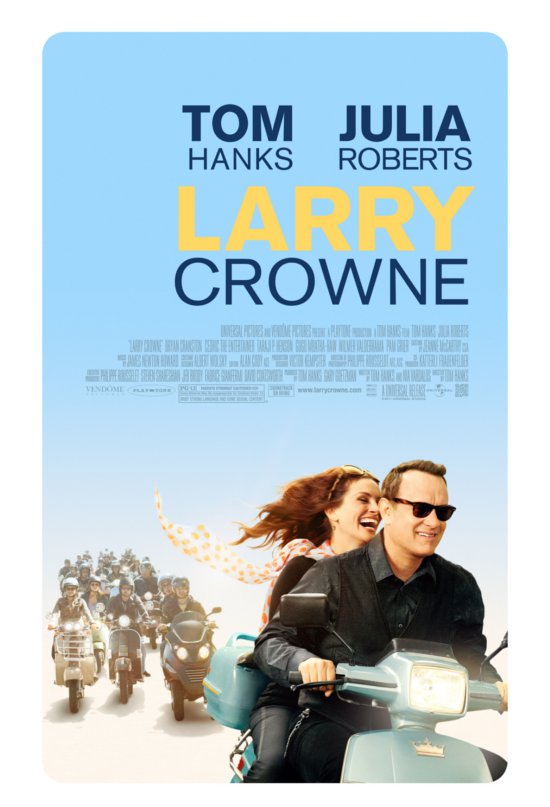
My best friend informs me that “Larry Crowne is so stupid!” He’s usually more eloquent than that, just not when he’s wrong. On his international press tour for the film, writer/director/star/most-beloved-man-in-Hollywood Tom Hanks had a single line that he trotted out in some form or another every one of the 4 million or so times he was asked what the film was about: “it’s an antidote to cynicism”. I think it’s that very feature that my “realist” friend so ineloquently can’t get behind. I, on the other hand, am all for it. When Conan O’Brien was leaving The Tonight Show, endlessly bitter and fundamentally heartbroken, his parting words were a plea that his audience not be cynical. “It’s the most useless thing in the world”, he said of the state he had every right to be in. And Conan was, as he often is, very right. For almost everyone I know, 2011 has been an absolute shit (excuse the language, there just is no true synonym). But the people who are making it through the best are the ones with the acute awareness that 2012 is just around the corner and that it, surely, will be better. Larry Crowne is a film about possibility, the counter-argument to the “lost potential”, “missed opportunity”, “you only peak once” narratives that have come to dominate our overly competitive lives.

Wednesday, July 27, 2011

On The Road w/ Coogan and Brydon

The Trip is an odd film. A lot of people won’t like it, it won’t win many awards and in a million years it wouldn’t make for a passing grade in any university film course. Because nothing happens on The Trip. The characters are largely the same when they return as when they leave, there is no significant rising action, no obvious climax, the characters don’t set out with a tangible goal in the “Dorothy just wants to go home”-sense. But like many things that wouldn’t make for a passing grade in a university film course, The Trip is simply wonderful.

Playing slightly exaggerated versions of their real selves, UK comedians Steve Coogan and Rob Brydon set out on a restaurant tour in Northern England. We begin with Coogan half-heartedly inviting Brydon along when his elusive American girlfriend declines. Brydon asks “why me?” and Coogan plays it cool to a mildly insulting degree, insisting that Brydon is his last resort, thus establishing the complex, petulant and achingly real dynamic that becomes the highlight and purpose of the film.

Wednesday, July 13, 2011

Awesomely Horrible Bosses

by Rachael Nisenkier

It’s hard to write about good comedies. Sometimes something clicks, and I can find some sort of narrative hook for writing about why, say, I find the jokes of I Love You Man so effective or why The 40 Year Old Virgin changed cinematic comedy. But sometimes you see a comedy and just think, “Damn. That was well done.” Such is the fate I find myself facing after seeing Horrible Bosses.

This movie fulfills its purpose in every way. It does a fantastic job crafting bosses evil enough that you can actually find some sympathy in the plotting of their murders. It creates protagonists who are at once likable, and believable, in a hapless way, in their ability to murder their own bosses. And it sustains comedic tension while only briefly pushing the boundaries of believable cinematic vision. That it does all this while remaining stubbornly filthy and goofy is a testament to how well done this film is.

From its across-the-board fantastic cast (Colin Farrell and Jennifer Aniston, in particular, play well on their established personas) to its absurdist leanings (not going to spoil the joke, but the punchline with the Jamie Foxx character was enough to redeem that actor for me), this is otherwise-disposable comedy done really well.

 I’m someone who rewatches comedies a lot. And I can always tell if I love a comedy movie if about halfway through I realize I'll go back and watch it again. I was ready to rewatch Horrible Bosses about ten minutes in.

Tuesday, July 5, 2011

The Feminist Argument

My Cinema's senior staff writer Rachael disagrees with Kelly's thoughts on Bridesmaids (found here). So we thought we'd publish her article too, and let you decide. The last time this disparity happened we ended up with two of our most popular and most controversial articles ever (Black Swan: Love and Hate). Read on after the jump for Rachael's feminist take on Bridesmaids, Bad Teacher, Transformers and more.

Thursday, June 30, 2011

At the Cineplex

Summer brings with it just a few guarantees: hot weather, kids out of school and blockbuster season at the Cineplex. With so many big budget, massive star vehicles charging into theatres (along with some lesser-known experiments), we at My Cinema are always struggling to keep up. So, here's a quick overview of some of the films we've seen in recent months- the ones that didn't quite warrant the full review treatment but deserved a mention nevertheless.

Read about Bridesmaids, Arthur, Water for Elephants and Pirates of the Caribbean: On Stranger Tides after the jump.

Wednesday, February 2, 2011

My Cinema Recommends: Barney's Version

You probably didn't see it. It's only up for one Oscar (makeup?! really?!) and though Paul Giamatti won Best Actor at the Golden Globes for his truly extraordinary performance, no one really lends much weight to the comedy/musical categories or even pays attention to the Globes if the Oscars don't seem to agree. But here's what I'm saying: they're wrong, you REALLY SHOULD see it.

Barney's Version is one of the most touching films of the year, one of the wittiest, one of the most complex,  one of the most evocative. It's expertly acted with the incomparable Paul Giamatti at its core delivering what I think is easily the performance of his career so far. He's joined by the beautifully understated Rosamund Pike and the beautifully overstated Minnie Driver as well as Scott Speedman, who is excellent as Barney's enigmatic friend Boogie, and the always-wonderful Dustin Hoffman as Barney's eccentric father. The script by Michael Konyves, adapted from Modercai Richler's novel, is superb, telling a fascinatingly funny and heartbreaking story.

That's all I can say, I've run out of adjectives. Just see it, you can thank me later.